Spatial Organ Recordings (2024 - Ongoing)
Audio Engineer, Lead Investigator, Lead Author
Within stereo classical music recording, specialized techniques for the organ have largely been relegated to footnotes or appendices in the face of more accessible instruments and ensembles. As immersive recording techniques for classical music continue to develop, little convention has been established regarding immersive organ recording techniques. Furthermore, a significant portion of the organ repertoire does not exist in any sound recorded form at all, and risks being lost or forgotten over time. Pipe organs already face numerous threats to their existence, including decreased attendance to houses of worship, under-funding, improper restoration, and electronic substitutes.
While the organ repertoire is vast, experiencing that repertoire in a form similar to that intended by the composer is often inconvenient, as stereo recordings frequently don’t provide a deep level of psychoacoustic immersion, and in-person experiences are realistically limited to those located within a convenient distance of a house of worship with a skilled organist willing to learn and perform said repertoire.
This project aims to open the door for expanded conversation around establishing best practices and techniques for recording and reproducing pipe organ music in an effort to both preserve the unique medium and broaden its appeal and accessibility to a wider audience through an immersive environment.
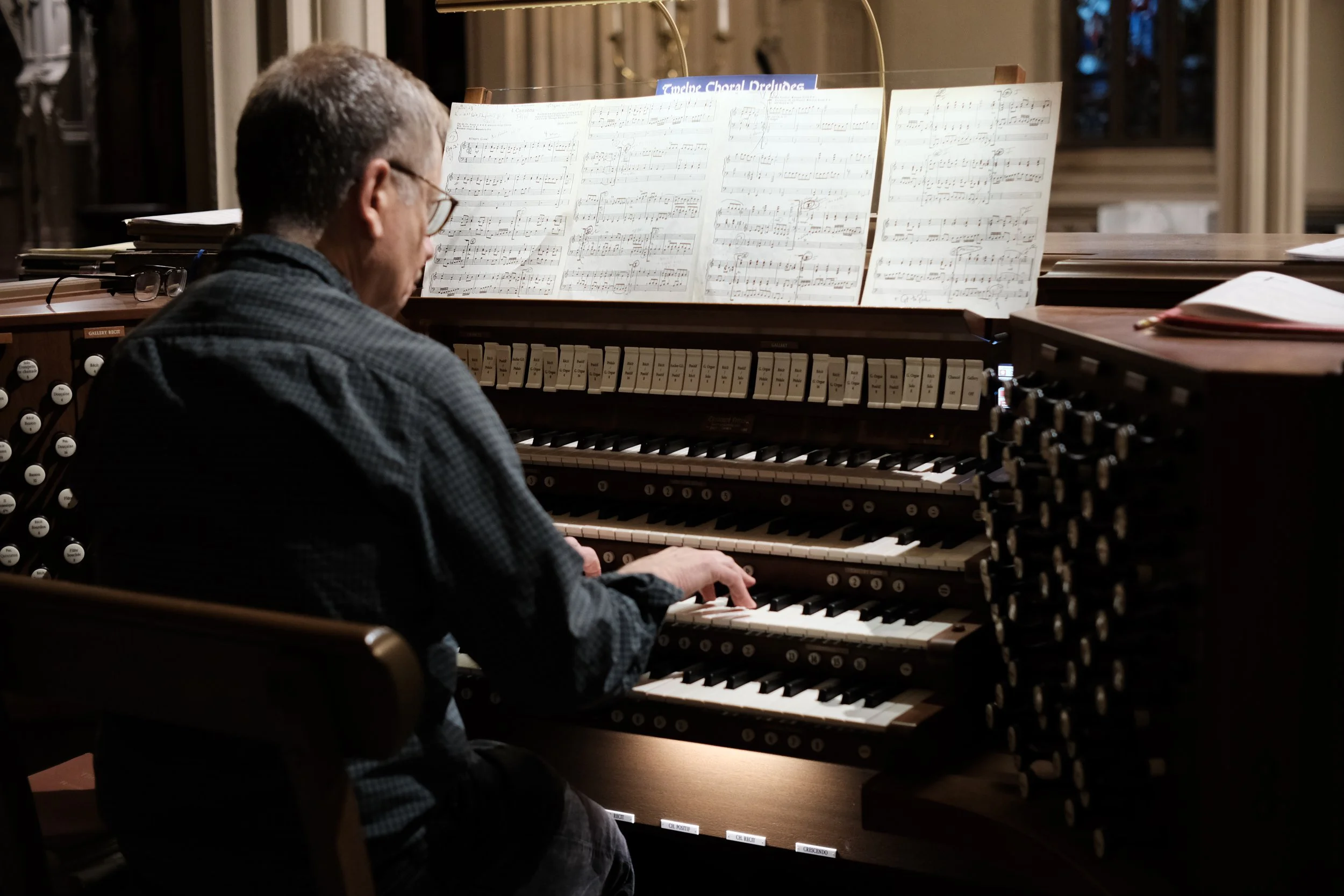
This publication (presented at the 157th Audio Engineering Society Convention) may be found here. An ambisonics & accompanying 360º video recording of Schumann’s Prelude & Fugue in D minor Op. 16, No. 3 performed by Canon Larry Tremsky is provided on this page.
Please be aware that spatial audio in 360º YouTube videos is only functional as an embedded video, so please click the play button on this page for the full experience.